The Great Wall of China: A Personal Journey Through History, Mountains, and Time - Poparao
Tourism 12 min read The Great Wall of China: A Personal Journey Through History, Mountains, and Time The Great Wall of China: More Than Just a WallThere are some places that look impressive in photographs but feel comple...
The Great Wall of China: A Personal Journey Through History, Mountains, and Time
The Great Wall of China: More Than Just a WallThere are some places that look impressive in photographs but feel completely different when you finally see them in person.The Great Wall of China is one of those places.Bef...
August 23, 2026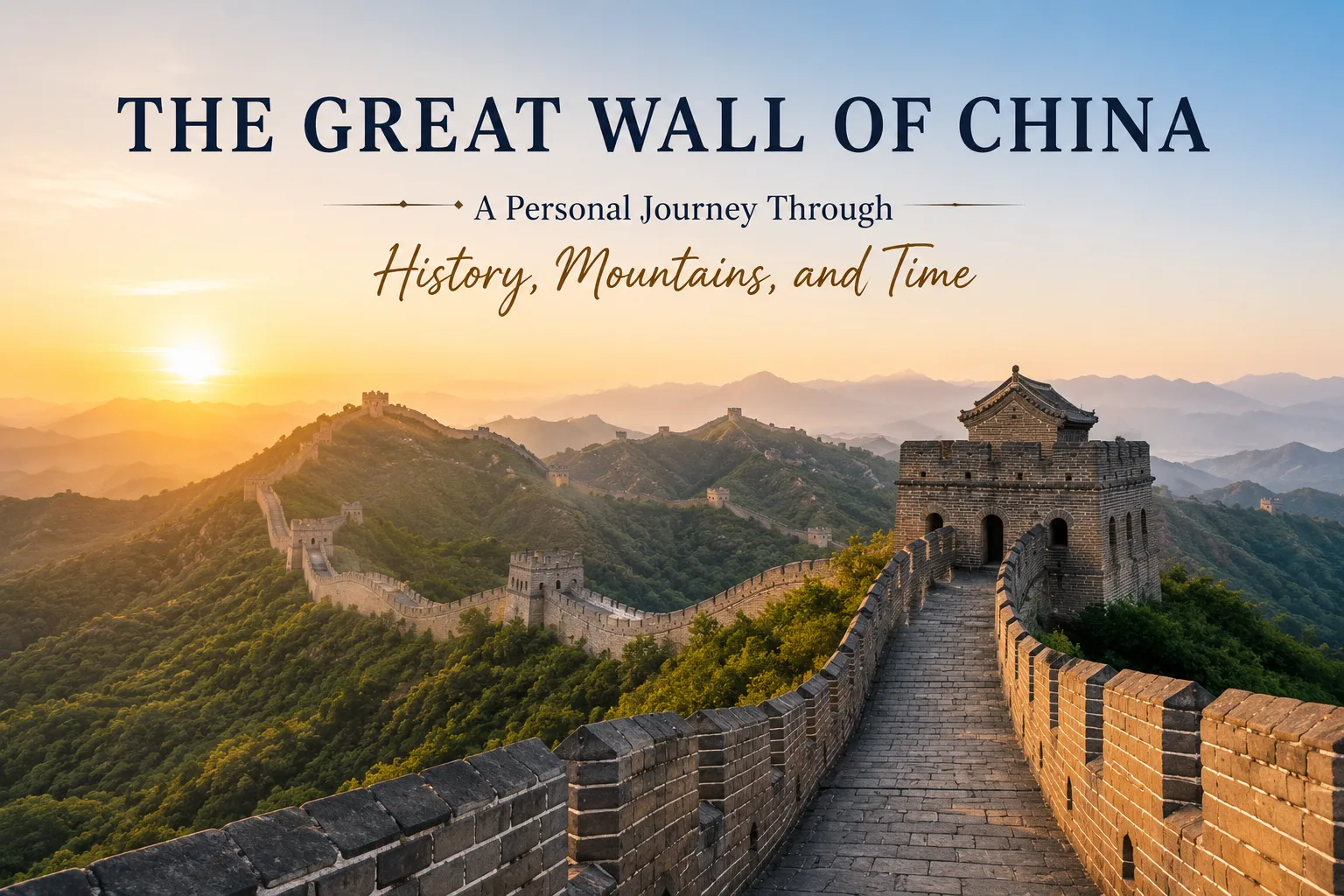
The Great Wall of China: More Than Just a Wall
There are some places that look impressive in photographs but feel completely different when you finally see them in person.
The Great Wall of China is one of those places.
Before visiting, you may have seen countless pictures of the wall winding across green mountains or disappearing into a hazy horizon. You may already know that it is one of the world's most famous landmarks.
But photographs don't really prepare you for the experience of standing on it.
The first thing you notice is the landscape.
The mountains seem to stretch endlessly around you. The wall rises and falls with the terrain, sometimes gently and sometimes so steeply that you have to stop for a breath. Old watchtowers appear in the distance, connected by a long line of stone and brick.
And then you start thinking about the people who walked here hundreds of years ago.
Soldiers once stood in those towers. Messengers traveled along these paths. Workers carried heavy materials through difficult mountain terrain.
Suddenly, the Great Wall doesn't feel like an ordinary historical attraction.
It feels alive.
That is what makes this extraordinary landmark so special.
What Is the Great Wall of China?
The Great Wall isn't actually one single wall built at one particular time.
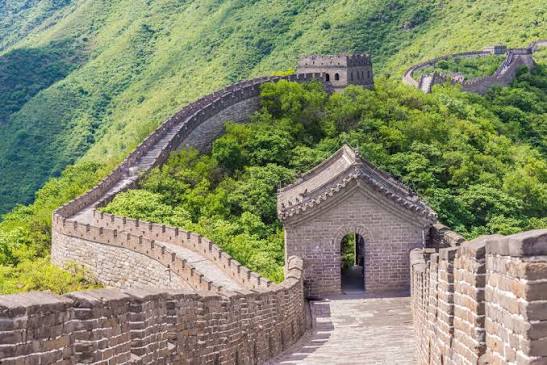
It is a huge network of walls, fortifications, watchtowers, gates, trenches, and defensive structures constructed during different periods of Chinese history.
Some of the earliest defensive walls were built more than 2,000 years ago.
Different Chinese states and dynasties added to these defenses over the centuries. They repaired old sections, built new ones, and extended the system into different regions.
The sections most visitors recognize today are largely associated with the Ming Dynasty, which ruled China from 1368 to 1644.
So when you visit the Great Wall, you're not seeing one historical moment.
You're seeing layers of history built across centuries.
That makes the wall much more interesting than the simple idea of an enormous stone barrier.
Why Was the Great Wall Built?
The main reason was defense.
For much of Chinese history, northern regions faced raids, conflicts, and military threats from different groups.
The wall provided strategic positions from which soldiers could observe the surrounding landscape and respond to threats.
But the Great Wall had other functions as well.
It helped control important mountain passes and routes. Gates could regulate movement, while watchtowers allowed soldiers to communicate over long distances.
The wall was therefore part of a much larger military system.
It wasn't simply designed to stop people from crossing.
It was designed to help authorities control and defend important parts of the frontier.
A History Spanning Thousands of Years
The story of the Great Wall begins long before the famous sections near Beijing.
Ancient Chinese states built walls to protect their territories from neighboring powers.
Later, after Qin Shi Huang unified China in the third century BCE, earlier defensive walls were connected and expanded as part of broader efforts to protect the northern frontier.
The work didn't stop there.
Later dynasties continued to build and modify defensive structures.
The Han Dynasty expanded frontier defenses farther west, while other dynasties developed their own systems.
The Ming Dynasty eventually constructed many of the most impressive surviving sections.
This long history is one of the reasons the Great Wall is so fascinating.
It isn't simply an ancient building.
It is a physical record of China's changing history.
The Ming Dynasty and the Great Wall
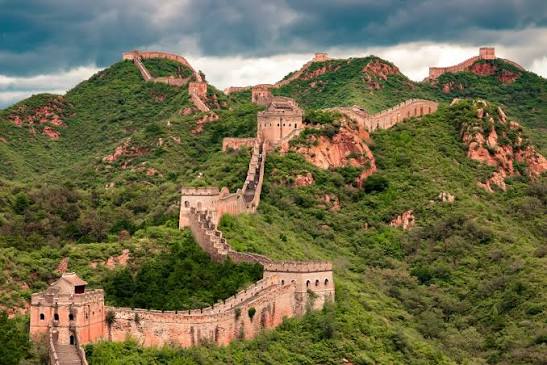
When most people picture the Great Wall, they are probably imagining the sections built or heavily reconstructed during the Ming Dynasty.
These sections are often made from bricks and stone and include impressive watchtowers, gates, and fortified passes.
The Ming government invested heavily in frontier defense.
The wall became a sophisticated military system rather than a simple line of fortification.
Soldiers could be stationed in watchtowers and fortresses.
Supplies could be stored along important routes.
Signals could be sent from one tower to another.
The scale of the system is difficult to appreciate until you see the landscape yourself.
The Architecture of the Great Wall
One of the things I find most fascinating about the Great Wall is that it doesn't try to fight against nature.
It follows it.
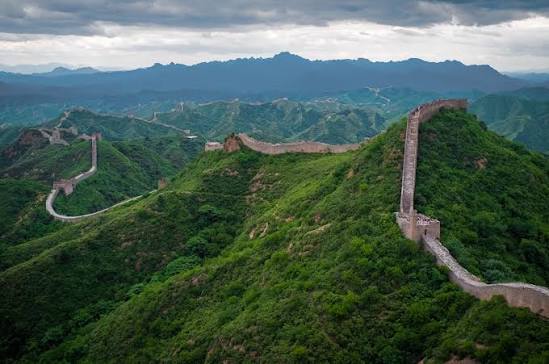
Instead of cutting through mountains in a straight line, the wall climbs ridges, crosses valleys, follows slopes, and winds around difficult terrain.
From a distance, it can look almost like a giant stone serpent moving through the mountains.
The builders understood that the landscape itself could provide protection.
A wall positioned high on a mountain ridge offered an excellent view of the surrounding countryside.
Narrow passes created natural defensive points.
The architecture and geography worked together.
That's one reason the Great Wall feels so perfectly connected to its surroundings.
Watchtowers: The Eyes of the Wall
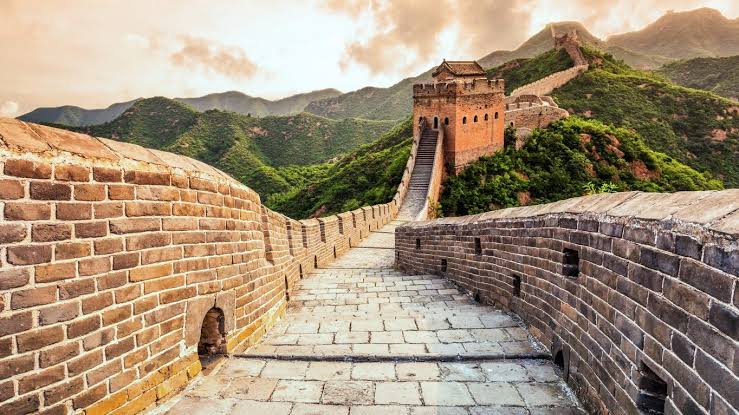
The watchtowers are among the most recognizable features of the Great Wall.
They were much more than simple lookout points.
Soldiers could use them to watch the surrounding area, store supplies, rest, and communicate with other defensive positions.
Historically, signals could be sent using smoke, fire, flags, drums, and other methods.
Imagine standing inside one of these towers centuries ago.
The landscape around you would have looked remarkably similar to what visitors see today.
A signal might appear on a distant mountain.
Then another tower would respond.
The message would continue along the wall.
It is fascinating to realize that this enormous structure once functioned as a communication network.
The People Who Built the Great Wall
It's easy to admire the Great Wall as a masterpiece of architecture and forget the people behind it.
But the human story is perhaps the most important part.
Building and maintaining the wall required enormous amounts of labor.
Soldiers, farmers, craftsmen, laborers, and other workers were involved at different times.
Materials had to be transported across mountains.
Bricks and stones had to be shaped and placed.
Food and supplies had to reach workers in remote locations.
The conditions were often extremely difficult.
Many people died during different periods of construction.
So when you walk along the Great Wall today, it's worth remembering that every section represents human effort.
The wall's beauty comes with a complicated history.
The Great Wall and the Chinese Landscape
The scenery around the Great Wall is one of the reasons visiting it can feel so magical.
The wall crosses many different types of landscapes.
Near Beijing, it winds through forested mountains.
Farther away, some sections pass through dry hills, grasslands, and even desert environments.
The appearance of the wall changes with the seasons.
In spring, the mountains become green and fresh.
Summer brings warmer temperatures and thick vegetation.
Autumn can be spectacular, with golden and red leaves covering the hillsides.
Winter creates a completely different atmosphere.
Snow can cover the mountains, making the ancient wall look quiet and almost dreamlike.
The same monument can therefore feel completely different depending on when you visit.
Famous Sections of the Great Wall
The Great Wall is enormous, and visitors have many different sections to choose from.
Some are heavily restored and easy to access.
Others are more remote and challenging.
Choosing the right section can make a big difference to your experience.
Badaling Great Wall
Badaling is probably the most famous section.
It is relatively easy to reach from Beijing and has been extensively restored.
The pathways are well maintained, and the surrounding mountain scenery is impressive.
Because it is so accessible, Badaling can also become very crowded.
If this is your first visit to the Great Wall, however, it offers an excellent introduction to its scale and architecture.
Standing on the wall and watching it disappear across the mountains makes it easy to understand why this place has captured people's imagination for generations.
Mutianyu Great Wall
Mutianyu is another popular choice, especially for travelers who want beautiful scenery.
It is known for its well-preserved architecture and forest-covered mountains.
The atmosphere can feel more relaxed than at some of the busiest parts of the wall, particularly if you arrive early.
The surrounding landscape is especially beautiful in spring and autumn.
For many travelers, Mutianyu offers a nice balance between accessibility, scenery, and history.
Jinshanling Great Wall
If you're looking for something more rugged, Jinshanling may be a better choice.
Some areas have been restored, while others retain a more weathered appearance.
This creates an interesting contrast.
You can see what restoration looks like while also getting a sense of how the wall has aged naturally over the centuries.
Jinshanling is especially popular with hikers and photographers.
The changing elevations and long views make the experience feel more like an adventure than a simple sightseeing trip.
What It Feels Like to Walk on the Great Wall
Walking on the Great Wall is probably the best way to appreciate it.
The first few minutes may feel easy.
Then the stairs begin.
Some sections are surprisingly steep. Others rise and fall constantly along mountain ridges.
You quickly realize that this wasn't designed as a comfortable walking path.
It was built for soldiers.
After climbing a particularly steep section, you might stop at a watchtower and look back at the path you've just traveled.
That's when the history begins to feel real.
You can imagine soldiers making the same journey.
You can imagine messengers carrying information between towers.
You can imagine workers moving materials across the mountains.
The physical effort helps you understand the scale of the structure in a way that reading about it never can.
The Great Wall in Chinese Culture
The Great Wall has become much more than an ancient defensive system.
Today, it is one of the most powerful symbols of China.
It appears in books, films, paintings, photographs, advertisements, and travel stories around the world.
For many international visitors, seeing the Great Wall is one of the experiences they most associate with traveling to China.
Its symbolism is understandable.
The wall has survived centuries of political change, wars, weather, erosion, and social transformation.
It represents endurance.
It also reminds people of the incredible organizational and engineering abilities of earlier civilizations.
But perhaps its most powerful meaning is human perseverance.
Generation after generation contributed to the structure.
And generation after generation continues to visit it.
Can You See the Great Wall From Space?
You've probably heard the famous claim that the Great Wall can be seen from the Moon.
It sounds impressive.
Unfortunately, it's a myth.
The wall is extremely long, but it is also relatively narrow in many areas and often blends into the surrounding landscape.
From great distances, it can be difficult to distinguish from mountains and other natural features.
But honestly, this doesn't make the Great Wall any less impressive.
You don't need to see it from space.
Standing on top of it is already enough to appreciate its extraordinary scale.
The Great Wall as a UNESCO World Heritage Site
The Great Wall was added to the UNESCO World Heritage List in 1987.
Its importance comes from its enormous historical, cultural, and architectural value.
It represents centuries of Chinese history and demonstrates the extraordinary effort required to construct and maintain large defensive systems in difficult environments.
Protecting the wall, however, is not simple.
Weather, erosion, plants, tourism, and human activity can all cause damage.
Some remote sections are especially vulnerable because they have not received the same level of restoration as popular tourist areas.
Preserving the Great Wall therefore requires a careful balance between allowing people to experience it and protecting it for the future.
When Is the Best Time to Visit the Great Wall?
There isn't one perfect season for everyone.
It depends on what you want to experience.
Spring is beautiful because the mountains become green and the weather is often comfortable for hiking.
Summer brings warmer weather and lush scenery, but the heat can make climbing difficult.
Autumn is one of the most popular seasons because the mountains can be covered in beautiful golden and red foliage.
Winter is colder, but snow can create an incredibly peaceful atmosphere and visitor numbers are often lower.
If you dislike crowds, arriving early in the morning can make a huge difference.
There is something special about standing on the wall before the busiest part of the day begins.
For a few moments, it can feel as though you have the mountains almost to yourself.
What to Bring
A visit to the Great Wall doesn't require complicated equipment, but comfortable preparation matters.
Wear good walking shoes.
Bring water, especially if you're planning a longer hike.
A hat and sunscreen can be useful during warmer months.
In winter, bring enough layers because mountain winds can be surprisingly cold.
And don't forget your camera.
The views are incredible, but don't spend the entire visit looking through a screen.
Sometimes the best photograph is the one you take with your memory.
Respecting the Great Wall
The Great Wall is a historic monument, not simply another hiking trail.
Visitors should respect signs and barriers and avoid climbing on fragile or restricted sections.
Don't remove bricks or stones.
Don't leave trash behind.
If you explore less-restored areas, pay attention to safety because some sections can be unstable.
Responsible tourism matters.
The Great Wall has survived for centuries, but it is not indestructible.
Every visitor has a small role to play in helping protect it.
Why the Great Wall Is Worth Visiting
There are many famous landmarks around the world.
But the Great Wall offers something particularly special.
It allows you to physically experience history.
You aren't simply standing in front of an ancient object behind glass.
You are walking on it.
You can enter a watchtower.
You can climb the same mountain ridges that soldiers once crossed.
You can look across the landscape and understand why these locations were strategically important.
The experience combines history, nature, architecture, and adventure.
That's difficult to find anywhere else.
Final Thoughts: A Journey Through Time
The Great Wall of China is often described as one of the greatest architectural achievements in human history.
That description is certainly deserved.
But after learning about its history, the wall begins to feel like something more personal.
It is a story about people.
About workers who carried materials across mountains.
About soldiers who spent long days watching the horizon.
About families and communities living near the frontier.
About rulers who believed enormous walls could protect their territories.
And about generations of people who continued to repair and preserve what had been built before them.
Today, travelers walk along the same ancient paths.
Some come for the photographs.
Some come for the history.
Others simply want to experience one of the world's most famous landmarks.
Whatever brings you there, the Great Wall has a way of slowing you down.
You climb.
You stop.
You look around.
And for a moment, the modern world seems very far away.
The mountains remain quiet.
The old bricks sit beneath your feet.
The watchtowers stand against the horizon.
And you begin to realize that the Great Wall isn't impressive simply because it is long.
It is impressive because of everything it represents.
The Great Wall of China is more than a monument. It is a journey through Chinese history, a remarkable achievement of ancient engineering, and a lasting reminder of human determination.
Its stones may be old, but its story continues every time someone walks along its ancient path and wonders about the people who came before.